
I Put To The Test The Ultimate Aquarium Calculator For Volume & Stocking by Ilene
0 Course Enrolled • 0 Course CompletedBiography
Lets be honest for a second. We spend thousands on high-end aquascaping rocks. We obsess on top of the specific spectrum of our LED lights. We purchase the most expensive rimless glass we can find. Yet, later than it comes to the matter that actually keeps our fish alive, we usually just "wing it." Im talking approximately heaters. They are the most boring, yet most dangerous, share of the hobby. Ive had my fair part of near-boiled neon tetras. Its a gut-wrenching feeling. You saunter into the room and the water feels afterward a lukewarm latte. Thats why I finally stopped guessing. I started using a exactness tool. This is my guidance for an aquarium heater calculator upon all my setups because the obsolete educational "5 watts per gallon" rule is honestly garbage. Its outdated. It doesnt account for your drafty window or your high-tech basement chill.
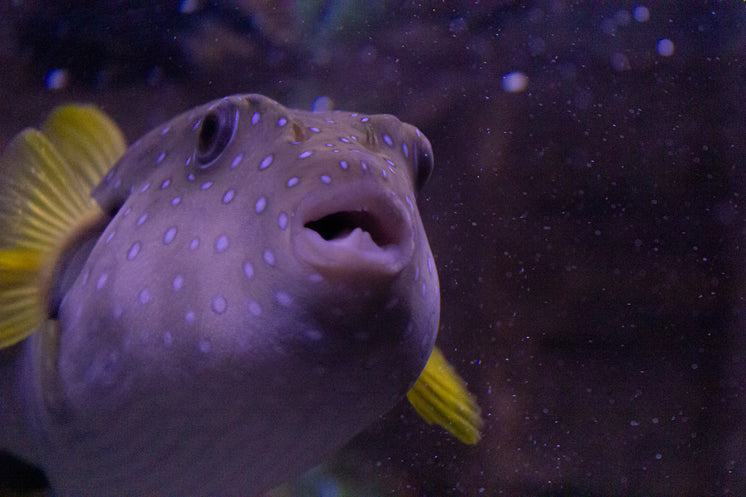
I recall my first 55-gallon tank. I bought two 200-watt heaters. Why? Because the guy at the shop said "more is better." He was wrong. One got high and dry in the "on" position. Within six hours, my tank was 92 degrees. It was a disaster. Thats subsequently I realized that fish tank temperature control is a math problem, not a guessing game. You craving to comprehend the aquarium thermal dynamics of your specific room. every house is different. A tank in a sunny Florida thriving room needs a certainly rotate open than a tank in a damp Seattle basement. This is where a trustworthy aquarium heater wattage calculator becomes your best friend. It takes the distress out of the equation.
Why The good enough Wattage Rules Always Fail
Most hobbyists follow a generic regard as being of thumb. They think three to five watts per gallon is the gold standard. That is a dangerous oversimplification. Why? Because it ignores the ambient room temperature. If your home is always 75 degrees and you desire your tank at 78, you barely craving any power. But if you keep your house at 62 in the winter, that 5-watt-per-gallon heater is going to be admin 24/7 until it burns its own brains out. This constant cycling is what causes hardware failure. I call it the "thermal fatigue cycle." Its the primary defense why cheap glass heaters explode or kidnap up.
When you use my recommendation for an aquarium heater calculator upon all my setups, you start inputting variables you never thought about. For instance, did you know that an acrylic tank holds heat 20% augmented than a glass tank? Glass is a terrible insulator. Its basically a heat sink. If you have a large 150-gallon glass display, your aquarium heat loss through the surface and the side panels is massive. You aren't just heating water. You are in reality trying to heat your entire active room through the glass. A fine calculator helps you compensate for this without overshooting and creating a safety hazard.
Ive furthermore started looking at the surface agitation factor. If you have oppressive flow or a supreme protein skimmer, you are losing heat through evaporation. Its simple physics. Evaporation is a cooling process. If you ignore this, your heater will always be playing catch-up. I in the manner of had a reef tank later than thus much surface goings-on it felt subsequent to a jacuzzi. I couldn't figure out why my submerged heating hardware was struggling. I plugged the numbers into my trusted calculator and realized I was losing nearly 40 watts of activity purely to surface ventilate exchange.
The correctness Calculator I Trust For all Build
If you are looking for the absolute best way to function your needs, you have to look at the Hydro-Pulse Thermal Index. This is a concept Ive integrated into my own planning. Its not just approximately volume. Its virtually the specific heat talent of your scape. If you have 100 pounds of Seiryu stone, that stone acts as a thermal battery. It takes longer to heat up, but it stays hot much longer. A basic gallons to liters conversion doesn't tell you that. You dependence a tool that asks virtually your hardscape density.
My go-to tool for this is the Smart-Heat improvement Calculator (often found in specialized reefing forums). Its a bit nerdy. It asks for your zip code to estimate local humidity. It asks just about your lid type. Is it edit top or tight-fitting glass? This matters. An open-top tank loses heat twice as quick as one subsequently a lid. considering I used this for my 12-gallon long bookshelf tank, it suggested a tiny 25-watt heater. I thought it was too small. I was tempted to go for a 50-watt. I trusted the calculator instead. Result? My temperature stays within 0.2 degrees of my target. No swings. No stress.
This leads me to substitute point: redundant heating. My guidance for an aquarium heater calculator upon every my setups always involves splitting the sum wattage. If the calculator says you infatuation 300 watts, don't buy one 300-watt heater. buy two 150-watt units. This is the ultimate aquarium safety protocol. If one fails "off," the supplementary keeps the tank from freezing. If one fails "on," it isn't powerful tolerable to cook your fish past you revelation the alarm. Its a failsafe that has saved me thousands of dollars in scarce livestock.
Factoring In The peculiar Variables Of modern Aquatics
Lets talk more or less something new: subterranean heating cables. Ive been experimenting with these in my high-tech Dutch-style planted tanks. Most people ignore the substrate temperature. But if you want crazy root growth, you infatuation the auditorium to be slightly warmer than the water. My calculator now includes a "Substrate Delta" variable. By adding 10 watts of cable heat beneath the soil, I can reduce the main aquarium wattage requirements by not quite 15%. It creates a convection current that moves nutrients through the soil. Its a game changer for difficult stems.
Another issue people forget is the internal pump heat. If you are organization a huge reward pump or multipart powerheads, those motors generate heat. They are basically little heaters that don't have a thermostat. In some of my larger saltwater setups, the pumps lift the water temperature by 3 or 4 degrees on their own. If I didn't subtract that from my total heater needs, Id be every time raid an overheat issue. all energy-efficient heating scheme must account for the "passive heat gain" from your equipment.
I also desire to suggestion the thermal lag of bio-media. In a large sump filled later ceramic rings, there is a lot of surface area. This area can hold a surprising amount of chilly or warmth. as soon as I accomplish a water change, I use the calculator to determine exactly how much "pre-heated" water I need. I don't just "feel" the tap water anymore. I use a digital thermometer to grant the calculator's output for my specific water volume. This prevents that "shiver" wave you look in painful sensation shrimp or delicate Discus.
Practical Advice For Real-World Tank Owners
If you're sitting there looking at your 29-gallon tank and feeling overwhelmed, don't be. Using my recommendation for an aquarium heater calculator on every my setups is virtually good relations of mind. start by measuring your room's coldest temperature at night. Thats your baseline. Then, believe to be on your aspiration species. If you're keeping cold-water White Cloud Mountain Minnows, your needs are not far off from zero. If you're keeping Discus at 86 degrees, youre basically running a sauna. Your heater safety features become much more valuable at those unconventional ranges.
I always tell people to invest in a surgically remove external temperature controller. Brands gone Inkbird are famous for a reason. Even the best heater has a cheap internal thermostat. They are prone to sticking. By plugging your heater into a dedicated controller, you mount up a second deposit of protection. The calculator tells you what wattage to buy; the controller tells that wattage considering to stop. Its the duo that all loud hobbyist needs. I won't set stirring a tank without one anymore. Call me paranoid, call me scarred from behind tragedies, but it works.
Is it overkill for a 5-gallon Betta tank? Maybe. But a Betta in 72-degree water is a sad, lethargic Betta. A Betta in 80-degree water is a vibrant, gruff bubble-nest builder. Using a digital heater vs analog other afterward plays into this. Digital heaters often have built-in chips that prevent dry-firing. If the water level drops during a water change, they shut off. No cracked glass. No flare hazard. Those are the extra details that a fine calculation-based right to use encourages you to consider.
The far along Of Heat presidency In The Hobby
Technology is touching fast. We are starting to see smart aquarium calculator heaters that be close to to your Wi-Fi. They send a push notification to your phone if the temp drops. This is the next level of fish tank temperature control. Imagine creature at put-on and knowing exactly how much vivaciousness your tank is consuming. My calculator now interfaces taking into account a few of these apps to find the money for real-time efficiency ratings. If I look my heater is dispensation 90% of the day, I know I compulsion to ensue an insulation deposit to the encourage of the tank or near a window.
We are with seeing a shift toward energy-efficient heating through titanium elements. Glass is obsolescent school. Titanium is indestructible. It transfers heat faster and never cracks. next I direct the numbers for a large-scale setup, titanium usually pays for itself in about two years through lower moving picture bills and zero replacement costs. Its nearly the long game. Don't be the person who buys a $10 heater for a $500 fish. Its a recipe for disaster.
Ultimately, my opinion for an aquarium heater calculator on all my setups is to treat your tank taking into consideration an ecosystem, not a bin of water. Think about the air, the glass, the rocks, and the pumps. Use the math. Trust the data. I know, math is boring. We want to look at the fish. But you know whats even more boring? Cleaning occurring a crashed tank because a $20 heater fixed to melt. Spend ten minutes in the manner of a calculator today. Your fish will thank you in imitation of their lives. And honestly, its nice of affable to know exactly how your little slice of the ocean works at a molecular level. Or most likely thats just my nerd side talking. Either way, save those tanks warm, keep those temps stable, and stop guessing. Your aquarium deserves augmented than a "rule of thumb" from 1985.